01Independence Square
After touchdown and settling in at the place of lodging, join us on a drive to the cradle of Ghana’s history to the Independence Square, Independence Arch, and Black Star monuments. There you will see the exact spot Dr. Kwame Nkrumah stood and declared Ghana an independent country.
02Kwame Nkrumah Mausoleum
Our next stop is to the resting place of Ghana’s first Prime Minister, Dr. Kwame Nkrumah. This exhibition Museum houses the mortal remains of Kwame Nkrumah. There are many personal effects of the prime minister on exhibition including furniture, pictures and books of the man who helped Ghana to gain its independence. The tour guides will walk you through a trajectory of the life of the man who helped Ghana gain win its independence from her colonial masters.
Look around this stop →
03W. E. B. Dubois Memorial Centre for Pan-African Culture
We will take you on other historical trips to The W. E. B. Dubois Memorial Centre for Pan-African Culture. At the center, the guides will retell the history of Ghana’s Pan-African roots and the links it had with the outside world, especially with the rest of Africa. At The Dubois Memorial Centre for Pan African Culture, you will have a chance to see many African cultures represented in arts and craft. W. E. B. Dubois Center for Pan African Culture is significant in the history of Ghana and that of Africa because it is this place that Dr. Dubois spent two years working on a Pan-African encyclopedia under the invitation of Dr. Kwame Nkrumah. Later you will have an opportunity to taste and learn about local cuisine and interact with other patrons. At night, we will drive you through some principal streets of the capital city where you can get a feel for the night life which is normally bursting with social activities.
04The National Museum
Witness traders do their business in the administrative capital of the country. We visit the warehouse of all of Ghana’s history, The National Museum. This edifice houses documents and historical artifacts that recount the history of Ghana from colonial times. It recounts on the migration to Ghana and also describes the life of the first inhabitants of Ghana. There is a true representation of the many ethnic groups in Ghana and how they are represented culturally. The tour guides will take time to answer any questions you will have on the history of Ghana. The evening drive will take you through one of Ghana’s oldest towns, James Town which is in the heart of Accra. It is a settlement of the Ga; indigenous people from the Greater Accra region.
05Beads Market, Koforidua
Venture into the eastern region of Ghana and visit the famous beads market in the regions capital, Koforidua. The beads market is made up of many bead sellers who are exhibiting their wares. The beads have been used to make colorful bracelets, necklaces and have even been used to design bags, shoes and slippers. Most of the time, the beads are worn around the waist of many Ghanaian women. At the market, you can bring your buying and bargaining skills
06Kakum National Park
Journey to the central region of Ghana to one of Ghana’s rain forests, the Kakum National Park. This natural forest habitat is one of Africa’s finest national parks. Kakum National Park is also in the Central parts of Ghana. It protects an area of rainforest, home to endangered mammals such as forest elephants, bongo antelopes and primates like the Diana monkey. The park is rich in butterflies and birds, including African grey parrots and hornbills. The highlight of the tour is the walk on the famous canopy in the forest reserve. The Canopy Walkway is suspended 30 meters above the ground and it provides treetop views of the forest.
Look around this stop →
07Cape Coast Slave Castle
Our tour guides will take you around the market district of Cape Coast and you will visit the Cape Coast Castle. The castle is close to the sea and represents one of Ghana’s darkest times in history. The colonial slave Castle was built by the Swedes in 1653. You will interactive with the castle tour guides and get an up close look at dungeons that housed the slaves. The castle also houses the West African Historical Museum, established in 1970; the museum was renovated in 1994 with funding from various local and international organizations, the Government of Ghana and the US Smithsonian Institution.
Look around this stop →
08Cape Coast Fisherman Village
Visit the shores of the fishing community in Cape Coast. When we arrive, we will get to interact with the fishermen and join them as we witness a day in a life of a fisherman on the coast. They will teach you indigenous songs about fishing that were taught to them by their predecessors. They will also share with you how to mend nets and teach you the taboos of the sea and taboos associated with fishing.
Look around this stop →
09Ashanti Kingdom – Manhyia Palace
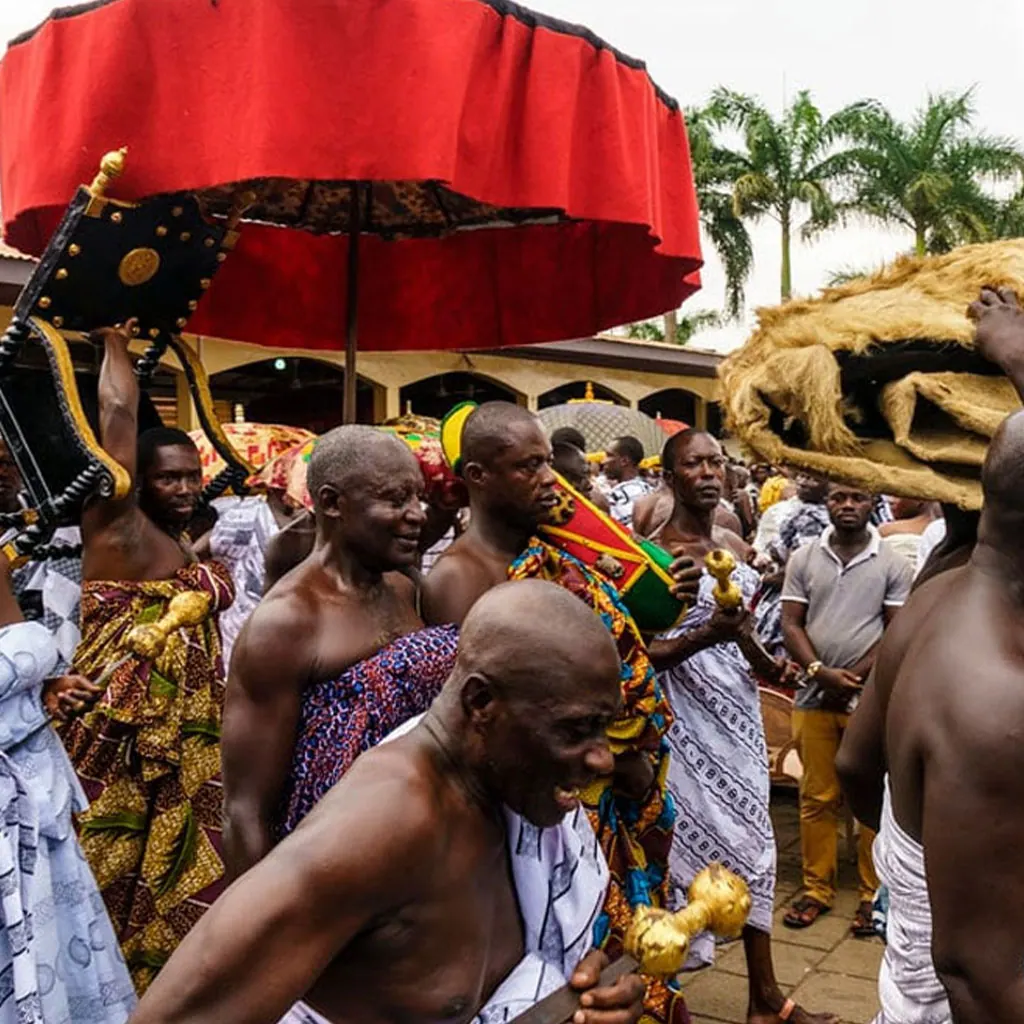
We take an early road trip to the Ashanti region to visit the cradle of the Ashanti kingdom, Manhyia Palace. The palace houses the paramount chief of the Asante Kingdom popularly called the Asantehene. In the palace, many elders will teach you about the history of the Asante Kingdom, taboos and the culture of the region. On lunch break try the fufu with soup, a local cuisine which is enjoyed by the people of the region. After the hearty bowl of fufu, we visit the Kumasi Museum where we are taught the history of the kingdom and learn about some of the great men and women who played major roles in the development of the Asante Kingdom including Okomfo Anokye and the great Yaa Asantewaa, queen mother of Ejisu.
10Kumasi | Central market | Craft Village | Ashanti Villages
We visit the central business district in Kumasi popularly called the Kumasi Central market. Get to witness buying and selling in one of Africa’s busiest local markets. You will learn about many raw materials and where they originate. You will be taught the uses of many indigenous products including the earthenware products. Experience the bargaining power of the indigenous buyers in the market. You see the activities of the head porters and how they carry out their daily activities. Visit the home of the colorful traditional cloth; Kente. The cloth is made in a town called Bonwire. On our visit, we interact with the weavers of the cloth as they teach us how the process of weaving. We will get to try our hands on the weaving and Here we learn the history behind the beautiful Kente cloth. We will hear the sound of drums in the air and the beauty in the culture of the people of the Asante Kingdom through their indigenous music, drumming and dancing. If time permits, you witness firsthand, the local dance and culture of the people. They will recount their history through storytelling and folklore. You may get an opportunity to practice playing the drums and learn the steps of the indigenous Adowa dance.
11Tetteh Quarshie Art Market
Teteh Quarshie Aft market is Accra’s largest arts market. Here you will find prints, paintings, wood arts and much more. Have a chat with the artists! Enjoy a drink at the Drink Bar. . Have a drink at the local “Spot” or enjoy freshly prepared Ghanaian food while listening to local drums! At the Centre Of National Culture or Arts Center, you will find a more varied selection of arts and crafts in wood, leather and metal and a huge textile market. You will see antiques from Africa and West Africa. You may order your special item directly from the craftsmen. Discover the richness of Ghanaian and African culture!
12Bojo Beach
It’s time to head over to the beach for some fun and relaxation. We will visit one of Ghana’s well maintained beach. It is a great place to sneak away from the busy city of Accra. The beach is becoming a very poplar beach destination for many tourists visiting Ghana. Bask in the sun and get the best sun-tan available on the continent. During the week the beach is a wonderfully tranquil haven and lots of space. However, the weekend and holidays are bustling with locals and visitors alike having a festive time playing volleyball, or jet skiing.